Showing posts with label art. Show all posts

A Means of Survival – A Lecture by Frank Benson

“The entire sculpture can fit on a flash drive.”


Frank Benson gave a lecture as part of the Leonard Hare Memorial Lecture Series at the University of Bristol. The Lectureship was established in 1946 in memory of George Hare Leonard, Professor of Modern History. Each year, a lecture is presented on fine arts. Benson discussed his practice as well as his sculpture, Castaway, which has recently been installed in Bristol’s Goldney Gardens.

Castaway (2019) (Photo: Ruby Salter)

Now on display in the expansive gardens of Goldney Hall, Bristol, is a life size bronze statue of Alexander Selkirk, the 18th century mariner who was allegedly the inspiration for Robinson Crusoe. Castaway depicts the mariner in a crouching position, eyes locked on a point ahead. The ship that eventually rescued Selkirk was funded by the Goldney family. As the title of the sculpture suggests, Benson imagines how a seaman may look if he had washed up ashore on a deserted island. Far from a simple portrait of Selkirk, the sculpture is more a representation of the fictional archetype of a ‘castaway’, the same figure portrayed by Tom Hanks in Cast Away or Matt Damon in The Martian. Benson’s depiction, topped with a strange shell-like hat and accompanied by a plastic detergent bottle, seems curious at first. Yet, as Benson outlined in his lecture, the sculpture is an amalgamation of ideas he has pursued throughout his artistic career.

The Martian 

 
Currently living and working in Brooklyn, Benson originally hails from Virginia, and was educated in Maryland. He notes the influence of growing up by the coast, and seeing objects wash up on the beach. Often these items were repurposed and transformed, given a new lease of life. This seems to be a continuous theme in Benson’s work. Perhaps it is also this early influence which has spurred him on his path to explore new effects that can be achieved by materials and finding new functions for quite normal substances.

Melted Beer Pitcher (2002) 

Photography was Benson’s initial exploration into experimental art. The first artwork he shows in the lecture is a photograph of a melted beer pitcher (2002). Benson talks passionately about the transformation that occurred when he placed a plastic pitcher in a microwave. The ‘found object’ underwent a metamorphosis, into another, unrecognisable object. He talks about how interested he is in the medium of photographing his sculptures. The very act of translating a 3D object into a 2D rendering changes how we understand it, there is an extra level of ambiguity, the object becomes far more mysterious.

Chocolate Fountain (2008) 

 This ambiguity of texture and material can be seen in his early experimental sculptures. Benson’s Chocolate Fountain (2008), is a fascinating play of function and substance. The ‘chocolate’ is in fact made from stainless steel and automotive paint. In some ways, it is similar to the art of the Surrealists, particularly Meret Oppenheim whose Breakfust in Fur is so alarmingly anti-function. In the same manner, even though it appears to be soft and mouth-wateringly liquid, the ‘chocolate’ s in fact hard and metallic. 

Meret Oppenheim, Breakfust in Fur, 1936

His MDF Piece (2008) is equally as engaging. Here, Benson replicates the motion of a piece of paper falling to the floor, humorously rendered using heavy, dense wood. Like the artwork of Claes Oldenburg, Benson’s art is at once impractical, intriguing and witty.

MDF Piece, (2008)

Claes Oldenburg, Giant Soft Fan (1966) 

Although Benson’s sculptures of people may seem to be of a different genre of art, they still engage with this fascination with material and transforming objects. A homage to street performers, Human Statue (2005) depicts a nude in silver paint. It is incredibly life like, helped by medical-grade glass eyes, and is often mistaken by gallery-goers as live performance art, rather than sculpture.

Human Statue (2005) 


For his Human Statue (Jesse), Benson produced a 3D scan and print of the model. He uses a digital sculpting programme called Z-Brush. It is often used in sci-fi films and video games, which makes Benson’s sculptures a captivating blend of industrial design, fine arts and special effects. The method allows him to create numerous versions of the sculpture, and in 2011, he created a version with a stone dress. The stone was sourced from a quarry in Carrara, Italy, which has been carving stone into sculpture for centuries. It is now done using robots, a fascinating interplay of ancient and contemporary techniques and resources.

Human Statue (Jesse), 2008 


Benson jokes that ‘the entire sculpture can fit on a flash-drive’. Although it is an off-the-cuff remark, it is an intriguing thought, as this really may represent the future for sculpting. Benson later tells me how, because he now has his sculptures saved in a 3D virtual format, the possibilities are endless, and he is in discussions with an AR (Augmented Reality) software producer about including his sculptures in a game. This really seems to be the ultimate metamorphosis: from one object into countless digital variations.

No other sculpture deals with the interplay of technology and art as beautifully as Juliana (2015). Rendered in flawless plastic and covered in oily, iridescent blue automotive paint, the piece seems otherworldly. Benson later mentions that Jeff Koons owns a version of Juliana and it isn’t hard to see why. The beautiful play of texture and material, and pushing the boundaries of technology and art is reminiscent of many of Koons’ sculptures. But really, Juliana, a video game character come to life, would surely put some balloon dogs to shame.
Benson’s three figurative sculptures are currently on display in Oslo, and are undoubtedly captivating in person.

Juliana, (2015) 


Castaway seems to be the ultimate conclusion to Benson’s career of ideas (so far). Much like many of his earlier works inspired by ready-made or found pieces, Benson repurposes a horseshoe crab shell as the castaway’s hat. He says the shells would often wash up on shore during his childhood, and seem like alien creatures. Likewise, Tide detergent bottle swould also appear on beaches. Benson says he chose to use these items as the castaway’s hat and canteen, because he likes the idea that he would ‘repurpose found objects as a means of survival.’ Benson notes this is analogous with his position as an artist, finding objects, techniques and ideas to breathe new life into. The model himself, Joe, reflects the same mindset, posing in his own clothes, all sourced from thrift stores. Benson comments on his ‘scavenger-mentality’ and ‘resourcefulness’, creating an amazing outfit from found elements, making him the perfect castaway.

At a time when we search for ways to better reuse and recycle, whilst also pursuing ever more advanced technology, Benson’s works are entirely of the moment. Whilst being humorous, beautiful and accessible, they also comment on where we are as a species. Somewhere in the greenery of Goldney Gardens sits a bearded man, looking out from under a crab shell, at Bristol’s coast and wondering what might wash up next.  

You May Also Like... 


0

Helicon ROOTS Launch Review

Originally published on Epigram...


To celebrate the release of their newest issue, UoB arts publication Helicon throw an arty party in Stokes Croft. With performance poetry, interactive and hanging art, and live music, the launch party impressed just as much as their issue. Hudi Charin reviews.
52402690_249925639268015_5043572424881209344_n
Epigram / Hudi Charin
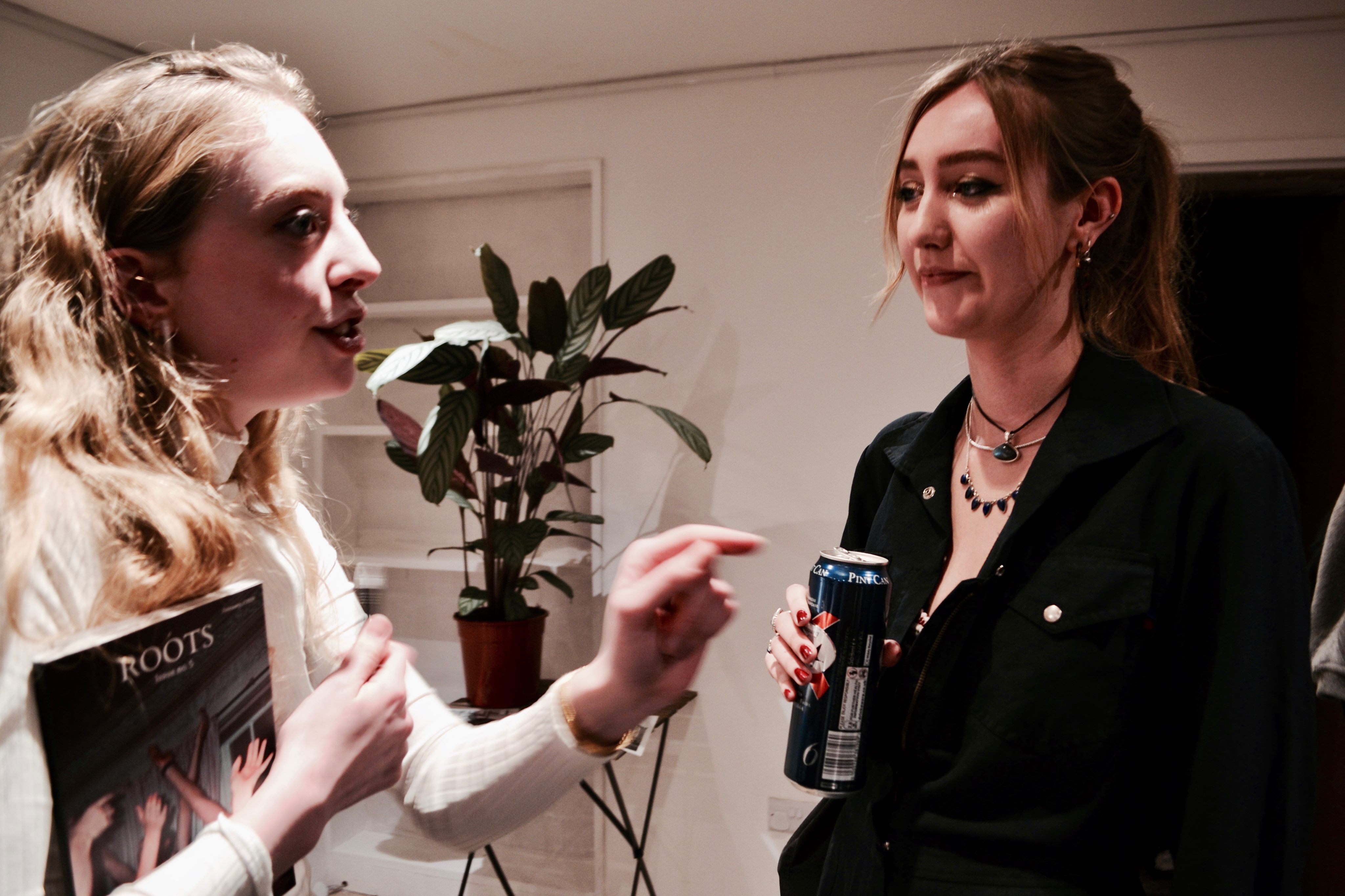
The theme for this issue is ‘ROOTS’, an exploration of the shifting meanings of identity and where we come from. Their last printed magazine was in April 2016, so Roots marks a particularly special event in the timeline of Helicon. At a cost of £5 a copy, you would expect a quality magazine, and you won’t be disappointed. Boasting 120 pages of original artwork, printed on quality paper, it is a slick final product. From photography to poetry, from prints to sketches, the magazine is no run-of-the-mill student zine, but a serious artistic publication. It isn’t light reading, but definitely thought provoking and complex, dwelling on compelling issues such as identity at university, moving away from home, and one night stands.
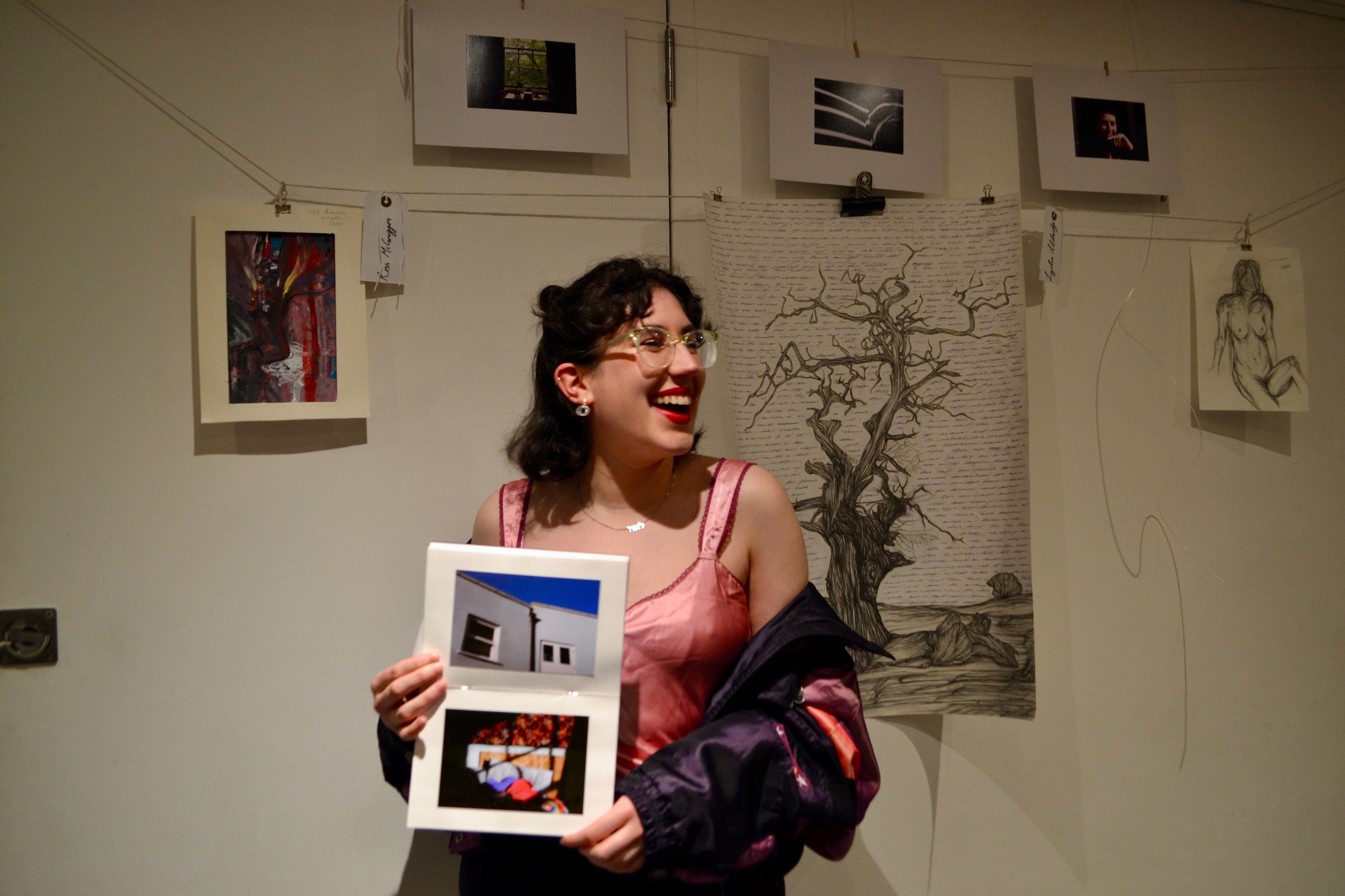
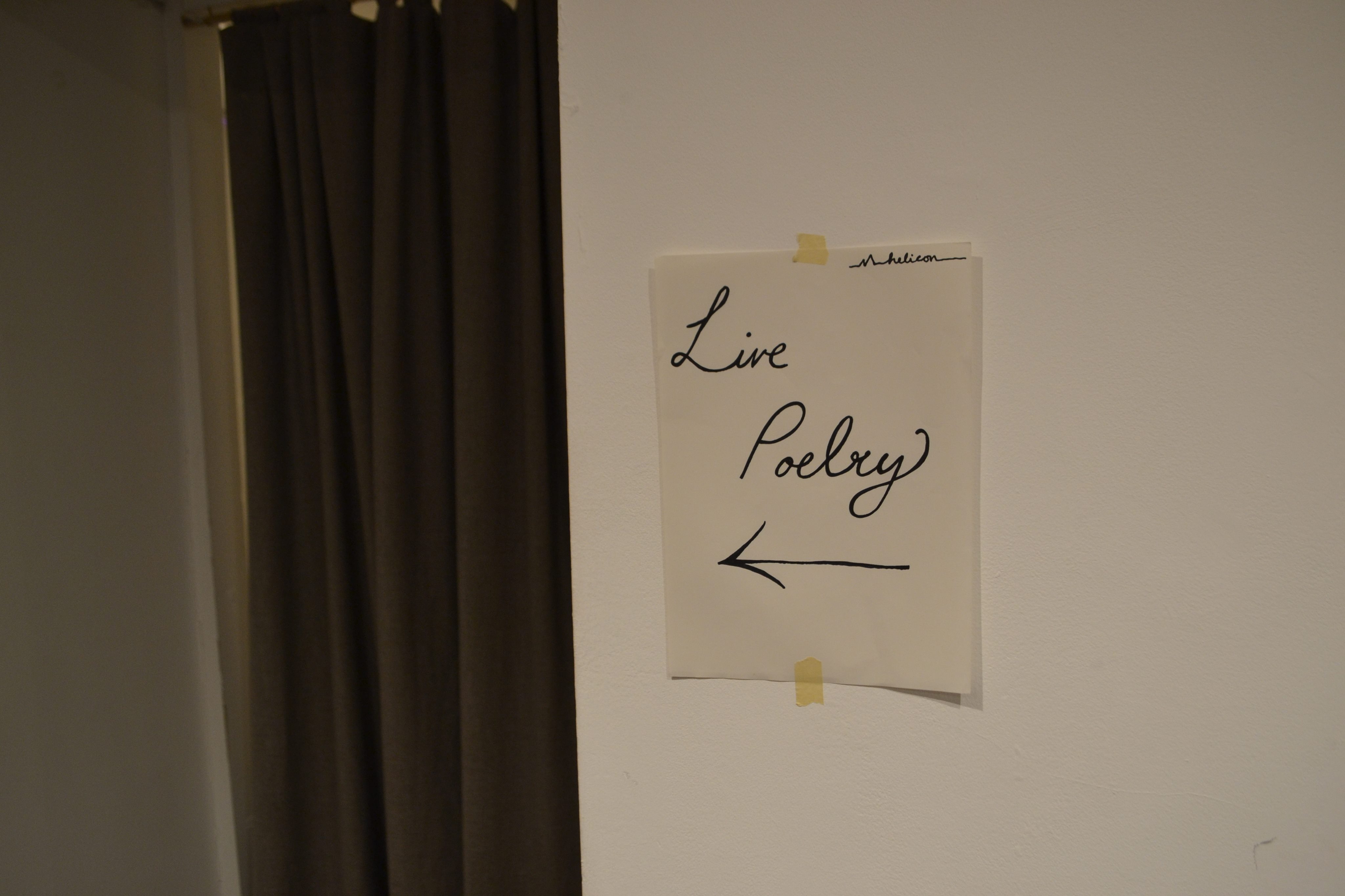
If the tone of the magazine’s greyscale pages seem a bit sombre, the launch party was quite the opposite. The BYOB event was upbeat, sociable, and different. Set across multiple spaces in the Elemental Bakery on Cheltenham Road, the venue was ideal, with a large room for live music and a bright gallery-space for the display of artworks. With smaller rooms for live poetry and an interactive DIY art space, the launch party was more than just a gig, with activities and ideas to explore throughout. It clearly demanded a lot of organisation and planning, and the Helicon team- Euan Dawtrey, Hannah Green, Suzie Beckley, Isabel Mitchelson and Luke Unger- pulled it off flawlessly.
Pic-1
Epigrma / Hudi Charin
The artworks, created by participants in Helicon’s weekly art classes, were hugely impressive, ranging from photographs to nude sketches to large canvas paintings. Steph Garratt’s geometric block colour portraits were particularly enthralling whilst Luke Batchelor’s photographs perfectly captured the chaotic rhythm of a night out in Bristol. The four well-selected live music acts, Nick Peter, HANAH, JAMBI and McGregor, played throughout the night, drawing in crowds to watch.
The poetry readings were, if anything, undervalued, resigned to a far too small room for the number of people who wanted to listen, piling in to hear their fellow students read poetry aloud. It was perhaps the most unusual part of the night, as seeing our peers stand up to reveal such vulnerability is something we do not experience often. Caitlin Thomson’s ‘Northern Roots’, a poem entirely in Geordie jargon, sums up the whole event. It was poignant, creative and funny, whilst also opening up our eyes to our fellow students, and where they have come from.
live-poetry
Epigram / Hudi Charin
Helicon are intending to publish another magazine, ‘Icons’ in May. Here’s hoping that their next launch party is as creative and enjoyable as their first.

You May Also Like...

https://lifeofanarthistorystudent.blogspot.com/2018/10/epigram-anti-art-counterpart-thebes.html
0

Arty Trip To Belgium: Travel Blog


 Like walking into a fairy-tale


You can do a lot in two hours. You can watch four episodes of Friends. You can watch two episodes of Game of Thrones. You can cook twelve bags of pasta. You can listen to six Ted talks. You can probably waste two whole hours scrolling through social media, let's be honest.

You can also go to Belgium from London. In just two hours you can be transported into a world of Medieval architecture, world-famous paintings, waffles, chocolate, beer… and EU flags. 

I did just that. For the last four days I have been packing in all the artiness a girl could get in three of Belgium’s most historical towns. Here’s what I saw…

Bruges
Nowadays Bruges is perhaps most famous as the setting for the Colin Farrell and Brendan Gleeson dark comedy In Bruges. But for us art lovers it’s also one of the centres of the Northern Renaissance. For anyone interested in medieval history, it is a must see. Even if you’re not a big history buff, it’s also, simply, beautiful. From its cobbled streets to jagged roofs, it is like walking into a fairy-tale.
Add caption

Add caption


Our first stop was the Historium. Rather than just a normal museum telling the history of Bruges, it mainly focuses on the city’s most famous artwork, Jan Van Eyck’s The Madonna of Canon Van der Paele. The whole museum is structured as a tour, which leads visitors through the making the of the artwork, with interactive rooms, showing everything from the behind-the-scenes of Van Eyck’s workshop to the sights and smells of the docks in 15th century Bruges. The fictitious storyline of the video accompanying the tour was pretty odd, and, at worst, distracting from the true value of the Van Eyck painting, but would undoubtedly appeal to kids. At the end of the tour is a balcony offering a great view over the square, as well as a virtual reality experience offering an amazing insight into historical Bruges.

Next door to the Historium is the Beer Museum. Although we didn’t have time to actually go into the museum, we did check out the shop which, as well as having pretty spot-on dรฉcor, offers a range of beers made in Bruges, alongside homemade Belgian cheeses and biscuits.

Beer
Add caption

Unfortunately the Memlingmuseum was closed for maintenance when I tried to go, which is a real shame considering it houses Hans Memling’s amazing St John Altarpiece. However, we could still walk around the courtyards of the St John’s Hospital, the location for which the painting was made and where it stays to this day. 

Add caption

Next up was Choco-Story. The narrow four floor building will tick off all your steps for the day and reward you with chocolate tasters throughout, as well as telling you all about the history of chocolate production from the Aztecs to the present day. Although the history is, obviously, very interesting, the main attraction is of course the kitchen on the bottom floor, where you are shown each step of the chocolate making process, and get to taste your very own Belgian chocolate at the end.

Chocolate sculptures in Choco-Story
Our final museum in Bruges was the Groeninge Museum which houses the Van der Paele piece as well as some other Netherlandish masterpieces, including Rogier Van Der Weyden’s St Luke Drawing the Virgin. It’s a pretty fascinating history of art walking through these halls which lead us through Belgian (and other European artworks) from the 15th to 20th century, although the earliest artworks probably still draw in the largest crowds.

Jan Van Eyck's Madonna of Canon Van Der Paele 

Whilst down by the museum, another major attraction is the Church of Our Lady. Not only is it a pretty phenomenal sight, but it also houses Michelangelo’s Virgin and Child as well as the tombs of Mary of Burgundy and Charles the Bold.

We stayed: In the Hotel Aragon, which is in a perfect location, a street or two away from the main square and an easy walk to everything. The service, breakfast and rooms were lovely. 

We ate: A lot of Deliveroo, to be honest, because it was so cold at night. We did discover Ellis Gourmet Burger, a chain restaurant across Belgium and the Netherlands, which has just brought out an incredible vegan burger, that could easily replace beef without anyone noticing.
Add caption

Add caption


Ghent


Ghent is the largest city we visited, and artistically, houses probably the most famous of the artworks we saw. Van Eyck’s Ghent Altarpiece was made specifically for the St Bavo's Cathedral. Although it is reportedly the most stolen and coveted artwork in history, it has been returned to the cathedral and can be viewed there today.
Add caption

Ghent


The altarpiece is perhaps most famous for the depictions of Adam and Eve, as well as the sacred lamb in the lower half. It is currently in quite a dark, dank, cramped room off the main nave, which I think takes away from the artworks real splendour. However, it is being refurbished and being readied for a much grander room where it is due to be moved next year.

Outside the cathedral is a magnificent sculpture dedicated to Jan, and his brother Hubert – who also worked on the altarpiece- for their huge contribution to art, and, particularly to the tourism industry in Ghent!

With Jan and Hubert Van Eyck's statue 

We also visited the Museum of Fine Arts which largely houses works from the 14th to 19th century, however, it has a sprinkle of contemporary artworks and installations throughout, which really adds to the general experience of viewing old and new artworks together. This is also where the Ghent Altarpiece is being restored, and they have a whole exhibit which allows you to see the behind the scenes, which is an amazing insight into painting conservation. 
Add caption
Add caption

Add caption
Add caption


We stayed: In the Holiday Inn Express, which is a bit further outside the city, but makes quite a difference to the price! It ended up being a great location, which was just an easy tram ride away from the centre. Breakfast was amazing and added to our Belgian experience with a waffle maker.

The theatre 
Add caption


Mechelen
The Grote Markt in Mechelen is a beautiful cobbled market square, with buildings dating back to the 13th century. The whole town is dominated by St Rumbold's Tower which can be seen from all around.
Add caption

Add caption


Add caption
Add caption

Add caption


In the centre of the square is a statue of Margaret of Austria, the 15th century princess who brought prestige and power to the city when she moved her court there, and brought ambassadors from all over the world to her magnificent palace. Her palace can still be seen from the outside and has a beautiful courtyard, but has now been turned into a courthouse.

Unfortunately, Mechelen shouldn’t be fully enjoyed without understanding and appreciating its involvement in the Holocaust. There is a large Holocaust Museum dedicated to the transportations that happened out of Mechelen. On the street from where the trains would leave is a single carriage on train tracks, a solemn reminder that despite the beauty of this town, there is a dark shadow over its history.

Add caption

A surprising hit in Mechelen is their museum. The Museum Hof Van Busleyden is perhaps one of the best museums I have ever been to (and, in case you haven’t noticed, I go to a lot of museums). Firstly, the building is medieval and beautiful from the outside, and then, amazingly modern and minimalist inside. It is also incredibly successful in how interactive it is. In each room, a little gold box can be opened to reveal something exciting to do with the artworks and ideas on show, from a spinning slideshow to a card game about the Burgundian family tree. There are also huge touch screens to get more information on the key players in Mechelen history. There is even a room playing orchestral symphonies to relate to Margaret of Austria’s love for music. Upstairs, there is a room just for sharing ideas, complete with the comfiest sofas ever and a virtual reality experience.
Add caption
Add caption


Museum Hof Van Busleyden 


We Stayed: In the Hotel Elisabeth which was the ideal location. It had a beautiful decor, lovely staff and quirky signs such as "Don't come in unless you're Brad Pitt." 
Add caption

Hotel Elisabeth

It is fair to say we packed it in over the last few days. My brain is exploding with art and knowledge whilst my tummy is exploding with Belgian chocolate.

You May Also Like...

http://lifeofanarthistorystudent.blogspot.com/2018/06/3-days-in-cairns.html

https://lifeofanarthistorystudent.blogspot.com/2018/04/a-week-in-tasmania.html

http://lifeofanarthistorystudent.blogspot.com/2017/07/3-days-in-como.html

http://lifeofanarthistorystudent.blogspot.com/2017/06/3-days-in-sofia.html


http://lifeofanarthistorystudent.blogspot.com/2017/01/48-hours-in-rome.html


0

copyright © . all rights reserved. designed by Color and Code

grid layout coding by helpblogger.com